Evaluating Funky Coffee: A Practical Guide for Modern Design Projects
In the crowded landscape of digital typography, finding a typeface that balances personality with professional utility can be a challenge. Designers often oscillate between sterile, safe options and overly decorative fonts that sacrifice readability for style. Funky Coffee emerges as a compelling middle ground, offering a modern and cute aesthetic that serves specific creative needs without compromising on versatility. This display font is not merely a novelty item; it is a functional tool designed for posters, logos, magazines, book covers, banners, and various other visual communication mediums.
For professionals ranging from marketing managers to independent freelancers, understanding the nuances of such a typeface is essential. It is not enough to simply like the look of a font; one must evaluate how it performs in real-world applications, how it interacts with other design elements, and whether it aligns with the intended brand message. This analysis explores the characteristics, strengths, and practical applications of Funky Coffee, helping you determine if it fits your current workflow and project requirements.
Defining the Aesthetic and Core Characteristics
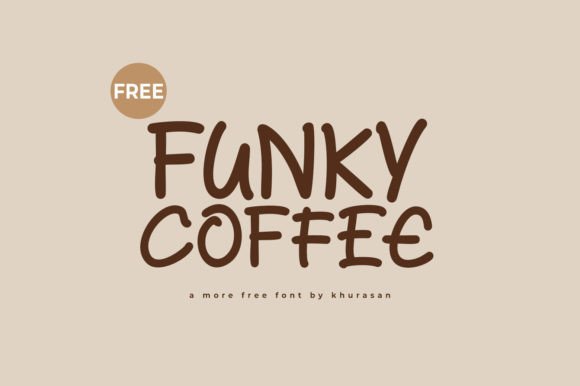
At its core, Funky Coffee is a display font. This classification is crucial because display fonts are engineered for use at larger sizes, such as headlines and titles, rather than body text. The design philosophy behind Funky Coffee leans into a "modern and cute" vibe, which translates visually into rounded terminals, consistent stroke weights, and a playful yet structured geometry. Unlike handwritten scripts that can appear messy or inconsistent, this font maintains a high degree of uniformity, ensuring that every letterform feels intentional and polished.
The "cute" aspect does not imply childishness. Instead, it suggests approachability and warmth. In an era where brands strive to humanize their digital presence, a typeface that feels friendly can significantly lower barriers between a business and its audience. The modern element ensures that the font does not feel dated or retro in a way that limits its relevance. It sits comfortably within contemporary design trends that favor clean lines softened by organic curves. This duality makes it a robust choice for projects that need to stand out without appearing unprofessional.
Practical Applications Across Industries
The versatility of Funky Coffee allows it to be matched to an incredibly large set of projects. However, its effectiveness depends largely on context. Here are several scenarios where this typeface demonstrates particular strength:
- Branding and Logos: For cafes, boutiques, children’s products, or lifestyle brands, a logo needs to be memorable and distinct. Funky Coffee provides a unique signature that can anchor a visual identity. Its legibility at various scales ensures that the brand name remains readable on both social media avatars and storefront signage.
- Print Media and Publishing: Magazine headers and book covers benefit from typography that captures attention immediately. When used for titles, Funky Coffee adds a layer of charm that can hint at the tone of the content—whether it is a lighthearted novel, a cooking magazine, or a travel guide.
- Digital Marketing Assets: Banners, social media graphics, and email headers require quick visual impact. The bold nature of display fonts works well here, allowing key messages to pop against busy backgrounds or images. Its modern feel aligns well with current web design aesthetics.
- Packaging Design: Product packaging often relies on typography to convey quality and personality. Using Funky Coffee for product names or taglines can make items shelf-ready competitors, appealing to consumers looking for something fresh and inviting.
It is important to note that while the font is flexible, it is not a universal solution. It is less suitable for dense body copy, legal documents, or corporate reports where neutrality and maximum readability are paramount. Recognizing these boundaries is part of using the tool effectively.
Usability and Integration into Creative Workflows
From a technical standpoint, the value of any font lies in its usability. A beautiful typeface is of little help if it is difficult to install, lacks necessary glyphs, or renders poorly on different devices. Funky Coffee is designed to integrate smoothly into standard design software suites. Whether you are working in Adobe Photoshop, Illustrator, InDesign, or free alternatives like Canva, the font files are typically compatible and easy to implement.
One of the significant advantages of this typeface is its pairing potential. Because it has a strong personality, it works best when balanced with a more neutral sans-serif or serif font for supporting text. For example, using Funky Coffee for a headline and a clean, geometric sans-serif for subheaders creates a visual hierarchy that guides the reader’s eye naturally. This contrast prevents the design from feeling overwhelming. Designers should experiment with spacing and kerning, as display fonts often require slight adjustments to ensure optimal balance between letters, particularly in all-caps settings.
Furthermore, the consistency of the font family ensures reliability across long-term projects. If you are developing a brand guideline that will be used for years, you need a typeface that will not look outdated in six months. The modern foundation of Funky Coffee suggests a longer shelf life compared to trend-heavy fonts that rely on fleeting stylistic gimmicks.
Who Benefits Most from This Typeface?
While any creator can appreciate good typography, certain groups will find Funky Coffee particularly valuable. Small business owners who manage their own marketing materials can use it to create professional-looking assets without hiring a dedicated designer. Freelancers and graphic designers can add it to their toolkit to offer clients a fresh option that deviates from the overused standard fonts. Educators and publishers might find it useful for creating engaging educational materials that feel less intimidating and more inviting to students.
Marketers and content creators focused on lifestyle, food, travel, and wellness sectors will also benefit. These industries rely heavily on emotional connection and visual appeal. A font that conveys warmth and modernity supports the narrative of comfort, enjoyment, and quality that these brands often promote. By adding Funky Coffee to your creative ideas, you notice how it makes them stand out in a saturated market where attention is the most scarce resource.
Limitations and Professional Considerations
To maintain an objective perspective, it is necessary to address potential limitations. As a display font, Funky Coffee should not be used for small print or extended reading passages. Its decorative nature can reduce legibility at smaller sizes, leading to user fatigue if misapplied. Additionally, because it has a distinct "cute" character, it may not align with brands that aim to project seriousness, authority, or high-tech precision. A law firm or a financial institution, for instance, would likely find this typeface incongruent with their brand values.
Another consideration is licensing. Always ensure that you have the appropriate license for your intended use, especially if the project involves commercial distribution or wide-scale advertising. Understanding the rights associated with the font protects both the creator and the client from legal complications.
Final Thoughts on Value and Implementation
In the realm of design resources, value is determined by utility and longevity. Funky Coffee offers a blend of aesthetic appeal and functional flexibility that justifies its place in a modern designer’s library. It is not just about getting an amazing font; it is about acquiring a tool that enhances communication. When used thoughtfully, it elevates simple layouts into engaging visual experiences.
For those looking to refresh their design approach, experimenting with this typeface can yield surprising results. It encourages a shift away from rigid, corporate aesthetics toward something more human and relatable. Whether you are designing a poster for a local event, a logo for a new startup, or a banner for an online campaign, Funky Coffee provides the stylistic leverage needed to capture interest. By understanding its strengths and respecting its limitations, you can leverage this asset to create lovely designs that resonate with your target audience and stand the test of time.